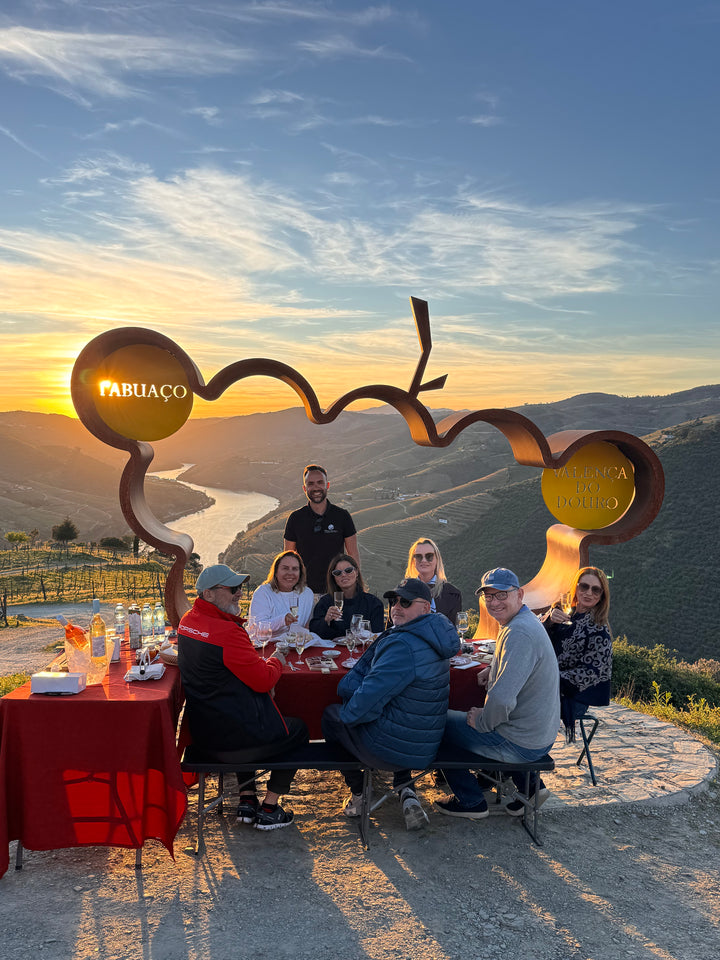
◷ Aprox. 9 horas👥 Máx. 12 personas
Experiencia Auténtica y Exclusiva en 4x4 por el Valle del Duero
Desde · por adulto€169,00
Ver fechas

Port is the wine most visitors to Porto have heard of and the one most of them can't quite explain. Is it sweet? Is it red? Why does it come from a city it isn't made in? Here's what our guides tell guests on the riverbank in Gaia: the styles worth knowing, how to drink them, and how to taste Port properly without spending the whole afternoon in a queue.
Port is a fortified wine. The grapes are grown on the steep terraces of the Douro Valley, about 100 km upriver from Porto. Partway through fermentation, the winemakers add a neutral grape spirit called aguardente. That stops the yeast before it has eaten all the sugar, so the wine keeps its natural sweetness and ends up stronger than table wine, usually around 19–22% alcohol.
The name comes from the city because that's where the wine has always left from. For centuries the young wine was taken downriver to Vila Nova de Gaia, the town facing Porto across the Douro, where the shippers' lodges aged it in cool cellars before sending it abroad. The flat-bottomed rabelo boats you see moored on the river today, barrels stacked on deck, are a reminder of that trip. The Douro was also one of the first wine regions in the world to have official borders, drawn up in 1756, and the valley is now a UNESCO World Heritage site.

Every lodge has its own list, but almost everything falls into a few families. The big split is between Ports aged mostly in bottle or large vats, which stay deep red and fruity, and Ports aged for years in small wooden casks, which slowly turn amber and nutty.
| Style | What it tastes like | How we'd drink it |
|---|---|---|
| Ruby | Young, dark, full of red and black fruit | Slightly cool, with dark chocolate or a cheese board |
| Tawny (and 10, 20, 30, 40 Year Old) | Caramel, dried fruit, nuts; more complex the older it gets | Lightly chilled, on its own or with almond desserts |
| Colheita | A tawny from a single harvest year, often very elegant | Slowly, after dinner |
| LBV (Late Bottled Vintage) | Rich and fruity, a step up from ruby | With strong cheese or a chocolate pudding |
| Vintage | The top of the ruby family, made only in the best years | Decanted, ideally after many years in bottle |
| White and rosé | Fresher, from dry to sweet | Cold, often with tonic |
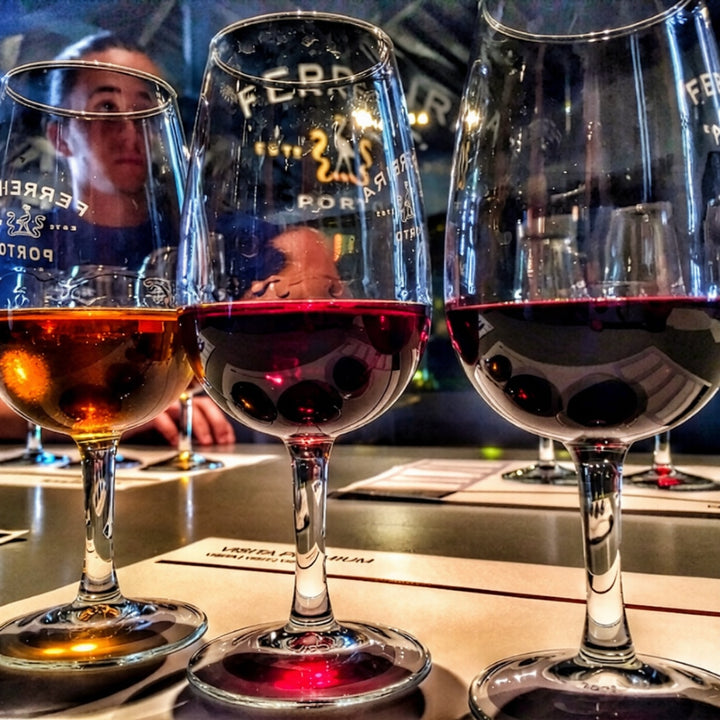
If you only remember one thing, make it this: ruby is about fruit, tawny is about time. Our honest advice for a first tasting is to try a young ruby, a 10 Year Old tawny and, if the lodge offers it, a 20 Year Old. The jump between those last two is where most people suddenly get it.
And yes, at this time of year Port is everywhere. In the run-up to Christmas you'll see bottles wrapped as gifts in every grocery shop, and many Portuguese families open one with dessert on Christmas Eve. If you're looking for a present to take home, a 10 Year Old tawny travels well and pleases almost everyone.
Cross the top or bottom deck of the Dom Luís I bridge from the Ribeira and you're in Gaia, where the famous names still have their lodges along the river and up the hill behind it. Most offer guided cellar visits that end with a tasting, from a simple two-glass flight to long sessions with aged tawnies and Colheitas.
A few honest pointers. The bigger houses on the waterfront are popular, so book a time slot online in advance, especially at weekends. The cellars are cool all year, so bring a layer even in summer. And don't try to do five lodges in one afternoon: after two tastings everything starts to taste the same. Two good visits with a long lunch in between is the better day.
Check each lodge's official website for current visit times and prices, as they change through the year.

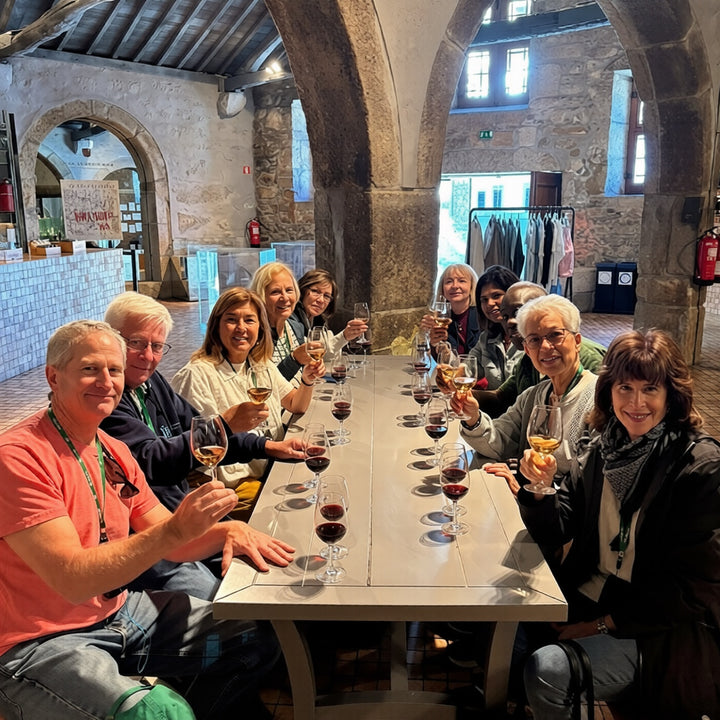
Taste Port with someone who can explain it. Our Porto Wine Tour starts at the Serra do Pilar viewpoint and takes you through Gaia's cellars, from a historic house to a small family-run one, with guided tastings of aged Ports and Vinho Verde. Small group, max 12 people.
See the tourThe lodges in Gaia tell the story, but the wine is born in the Douro Valley, where the vines climb the hills in terraces built by hand. A day there, with lunch at a quinta and a glass of Port looking down at the river, puts everything you tasted in Gaia into context. Pair it with a day in the mountains of Gerês National Park and you've seen the whole of the north. Still planning the trip up from the capital? Our guide to getting from Lisbon to Porto compares every option.
Want Porto and Port in one day? Our Porto Signature Experience walks you through the historic centre, Livraria Lello and the Clérigos, then finishes with a guided visit and tasting in a Port wine cellar.
See the tourMost Port is sweet, because fermentation is stopped while there's still sugar in the grapes. White Port is the main exception: it ranges from quite dry to very sweet, and the label will usually tell you which.
Ruby is aged mainly in bottle or large vats, so it stays red and fruity. Tawny spends years in small wooden casks, which turns it amber and gives it notes of caramel, nuts and dried fruit.
For the bigger lodges in Gaia, yes, especially at weekends and in summer. Smaller cellars are more flexible, but booking a slot saves you waiting around.
Escribimos estas guías como se lo contaríamos a una amistad que viene de visita: con sinceridad y desde la experiencia de nuestros tours. Si algo no encaja con tus planes, escríbenos por WhatsApp. Estaremos encantados de ayudarte.
Laila R.Fundadora de Portugal, Me & You
Portugal, Me & You
Grupos reducidos, entradas incluidas y cancelación gratuita hasta 24 horas antes.

Every winter the sea at Nazaré builds waves taller than a seven-storey building, and you can watch them from the cliff. Here's...
Leer la guía →
Una placa en una calle de Alfama, una esfera de piedra en el Rossio y un pueblo que guardó un secreto durante...
Leer la guía →
Pueblos de granito, caballos salvajes, ríos cristalinos y bosques otoñales a dos horas de Oporto. Así puedes pasar un día en el...
Leer la guía →Únete a más de 3700 viajeros que siguen a @portugalmeandyou para descubrir rincones ocultos, consejos de nuestros guías y momentos auténticos de nuestros tours.
Seguir a @portugalmeandyou Nuevas fotos e historias cada semana


