◷ Approx. 3 hours👥 Shared-table dining
Fado Dinner & Show: An Authentic Experience
From · per adult€69,00
See dates

Most people walk through Alfama looking up at the laundry lines and the castle. Very few notice the small street sign that says Rua da Judiaria. It's one of the last visible traces of a story that shaped Lisbon, and Portugal, for more than a thousand years: the story of the Sephardic Jews. Some of it is beautiful, some of it is brutal, and almost all of it is hiding in plain sight.
Jewish communities lived on this corner of the Iberian Peninsula long before the kingdom of Portugal was founded in the 12th century. In the Middle Ages they were doctors, astronomers, map-makers, translators, bankers and craftsmen, and many kings kept Jewish advisers close. Lisbon had more than one judiaria (Jewish quarter): a large one in the Baixa, near today's Rua da Conceição, and a smaller one in Alfama, down the hill from the castle.
That knowledge mattered. The navigational tables used on the great voyages of discovery were built on the work of Jewish astronomers like Abraão Zacuto, who taught at the court of King João II. When you look at the Monument to the Discoveries in Belém, remember that part of the science behind those ships came out of the judiarias.

Everything changed at the end of the 15th century. In December 1496, King Manuel I signed an edict ordering Portugal's Jews to convert or leave the kingdom. The decision was tied to his marriage to a Spanish princess, as Spain had expelled its own Jews in 1492, and many of them had crossed the border into Portugal.
But Manuel didn't actually want them to go: they were too valuable to the economy. So in 1497 most were baptised by force instead. Overnight, they became cristãos-novos, "New Christians". Officially Catholic. Privately, many kept their traditions alive behind closed doors.
Portugal didn't so much expel its Jews as make them disappear on paper.

On 19 April 1506, during a period of drought and plague, a crowd gathered in the São Domingos church, next to Rossio. A New Christian reportedly doubted a "miracle" the crowd believed they had seen. What followed were three days of violence across the city. Historians estimate that between 2,000 and 4,000 New Christians were killed.
King Manuel later punished those responsible, but the wound stayed hidden for centuries. In 2008, as part of the 500th anniversary, Lisbon finally placed a memorial in Largo de São Domingos: a stone sphere with a Star of David and the words "in memory of the thousands of Jewish victims of intolerance and religious fanaticism". On the wall behind it, Lisbon calls itself a "City of Tolerance" in dozens of languages.
Did you know this happened in Lisbon? Swipe through our post about the 1506 memorial and tell us in the comments: YES or NO?
See the post on InstagramIn 1536, Portugal established the Inquisition. Its Lisbon headquarters stood exactly where the Teatro Nacional D. Maria II is today, at the top of Rossio. For more than two centuries, New Christians could be denounced for lighting candles on a Friday night, refusing pork, or changing their sheets before Saturday. Many fled, and many didn't make it.
The ones who left took Portugal with them. Portuguese Sephardic families helped build the Jewish communities of Amsterdam, London, Hamburg, Bordeaux, Curaçao and New York. The philosopher Baruch Spinoza was born in Amsterdam to a Portuguese family. And the story goes that fried fish, which these families brought to England, became the ancestor of British fish and chips.
Here's our favourite story. In northern Portugal you'll find alheira, a soft, garlicky sausage that looks like it's made of pork. Tradition says it was invented by New Christians who needed their neighbours, and the Inquisition, to see sausages hanging in their kitchens. Instead of pork, they filled them with bread and poultry. Historians still debate how true this is, but try one fried with an egg on top and you won't care.

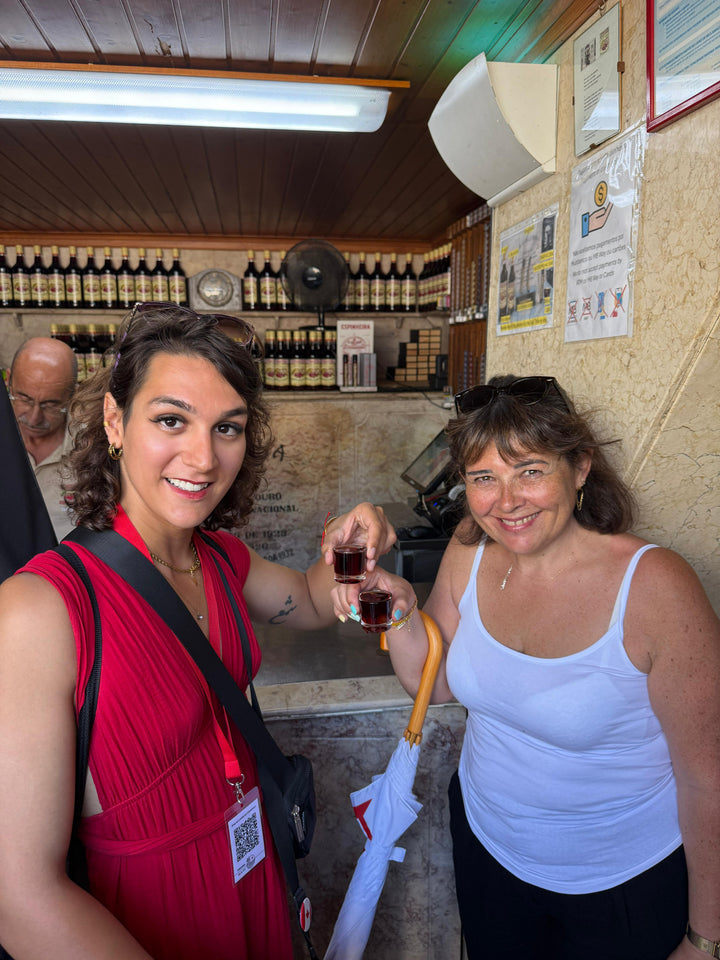
Walk the old Jewish quarter with a local. Our Alfama walking tour takes you through the lanes where Lisbon's Jewish community once lived, up to São Jorge Castle, with a ginjinha to finish.
See the Alfama walking tour
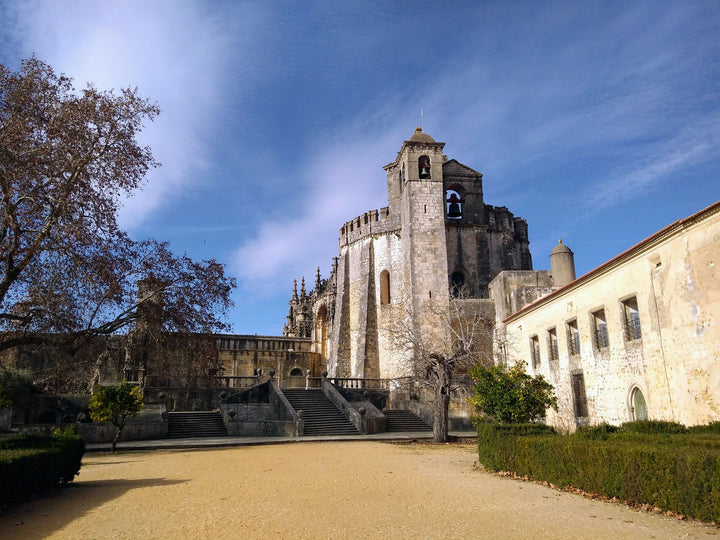
Tomar's medieval synagogue was built in the 15th century, just decades before the forced conversions. After 1496 it was used as a prison, a chapel and even a hay barn, which is partly why it survived. Today it houses the Abraão Zacuto Luso-Hebraic Museum. It's a small room, but standing inside it is very moving. Read our local's guide to Tomar to plan the rest of your day there.

This is the story that gives everyone goosebumps. In 1917, a Polish Jewish mining engineer called Samuel Schwarz arrived in the mountain town of Belmonte and noticed some families doing very unusual things: lighting candles on Friday nights, praying quietly in the kitchen, avoiding pork. They were the descendants of New Christians who had kept their faith in secret for more than 400 years, passing prayers from mother to daughter, mostly without books or rabbis. The community officially returned to Judaism in the late 20th century, opened the Bet Eliahu synagogue in 1996, and today Belmonte has a Jewish Museum that tells the whole story.
In the Alentejo town of Castelo de Vide you can still walk the old judiaria and visit a medieval synagogue turned museum. In towns like Trancoso, Guarda and Belmonte, look closely at the stone doorframes: some still carry small carved crosses and marks that historians link to New Christian families.
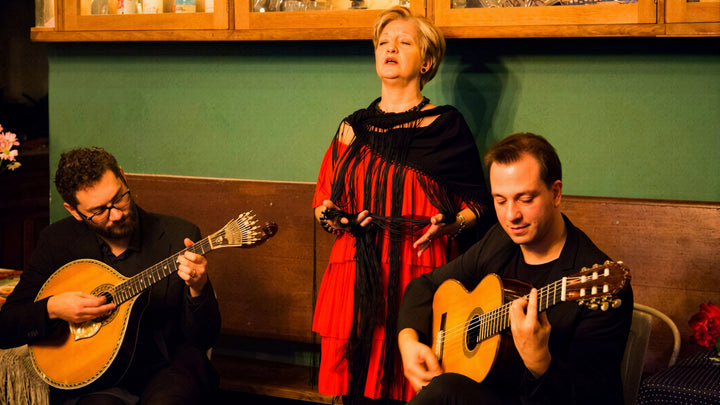
This is where it gets controversial. Fado as we know it was born in 19th-century Lisbon, and most historians trace it to the city's port neighbourhoods and to Afro-Brazilian rhythms. But some people hear in its minor keys and its saudade an echo of older Iberian laments, including Sephardic ones. Is it true? Nobody can prove it either way, and that's exactly why the debate never ends. We talked about it in our video on Instagram (watch it here), and the comments are still going. If you want to hear fado the right way, here's our guide on where to hear authentic fado in Lisbon.
End the night with fado. Live fado, traditional food, and a room full of stories.
See the fado dinnerIn 2015, Portugal opened a special route to citizenship for descendants of Sephardic Jews expelled in the 15th century, as a symbolic act of reparation. Tens of thousands applied. After years of debate, the route was ended for new applications under the revised Nationality Law in 2026. Whatever you think about it, it shows that this story is not just history here: it's still being argued about today.
Yes. Lisbon has an active Jewish community, with the Shaaré Tikvá synagogue as its main temple, and there are also communities in Porto and Belmonte.
You can, but there's very little signage. A local guide makes the difference between "a nice old street" and understanding what happened there.
It's about three hours each way by car, so it's better as part of a trip through central Portugal. Tomar is much closer and works perfectly as a day trip.
Questions before you book? Send us a message on WhatsApp at +351 912 102 706 and we'll help you plan your visit.
We write these guides the way we’d brief a friend coming to stay: honestly, and from what we see on our tours every week. If anything here doesn’t quite fit your plans, send us a message on WhatsApp. We’re always happy to help you plan.
Laila R.Founder at Portugal, Me & You
Portugal, Me & You
Small groups, tickets included and free cancellation up to 24 hours before.

Granite villages, wild horses, clear rivers and autumn woods, two hours from Porto. Here's how to spend a day in Portugal's only...
Read the guide →
Forget the menus with photos. These are the twelve dishes our guides tell their own friends to order in Lisbon, from the...
Read the guide →
When the lights go on, where the Christmas market is, what to eat and what closes over the holidays: our local guide...
Read the guide →Join 3,700+ travelers who follow @portugalmeandyou for hidden corners, guide tips and real moments from our tours.
Follow @portugalmeandyou New photos and stories every week


